Buy a used car and you ask to see the service history, because a car with a stamped book is worth more than the same car without one. Everybody accepts this. The book is not sentimental; it is the difference between a known object and an unknown one.
Now buy a house, which costs perhaps twenty times as much and contains a boiler, a consumer unit, a roof, several appliances and forty metres of pipework you cannot see. What you get is a carrier bag of manuals, a gas certificate from two owners ago, and whatever the previous occupants happened to remember during the handover.
Nobody keeps a service history for a house. The information exists — it is just distributed across tradespeople's memories, your own, and a pile of paperwork nobody has opened since the survey.
What actually goes missing
Not the big things. You will remember that the roof was done. It is the specifics, and the specifics are what cost money later.
The make and model of the boiler, and the date it was last serviced. The size of the filter the extractor takes. The colour of the hall — not "off-white", the actual name and code on the tin, and whether it was matt or eggshell. Which of the four unlabelled switches in the cupboard runs the outside light. Where the stopcock is, which you will need to know on exactly one occasion, urgently, in the dark.
What the plumber found behind the bath in 2023 and said to keep an eye on. The fact that the radiator in the back bedroom needs bleeding twice a winter and nobody knows why. The warranty on the washing machine and the date it started. The name of the electrician who was good, as opposed to the two who were not.
Individually these are trivia. Collectively they are the operating manual for a building, and every one of them was known by somebody at some point, usually by you.
The cost is paying twice for the same knowledge
Here is the part that should annoy you.
A tradesperson arrives, spends the first half hour finding the isolation valve, identifying the model, and working out what the last person did. You are paying for that half hour. You paid for it last time too, and the time before that, because the findings left with the last visitor.
The same applies to the decisions. You spent an afternoon in 2022 choosing between two ways of doing something, picked one for reasons that were good at the time, and by 2025 all that survives is the outcome without the reasoning — which is exactly the situation a decision journal exists to prevent, applied to a building rather than a career.
And the same applies to selling. A buyer who is shown a dated record of what has been serviced, replaced and inspected is a buyer who stops wondering what you are not telling them. That is not a small effect on a survey negotiation.
One note per thing that can break
The structure is the entire method, and it is boring on purpose.
Make one note for each thing in the house that has a model number, a service interval, or a history: the boiler, the consumer unit, the roof, the windows, each major appliance, the car. Not one note called "House", which becomes a scroll, and not forty notes, which becomes a filing problem.
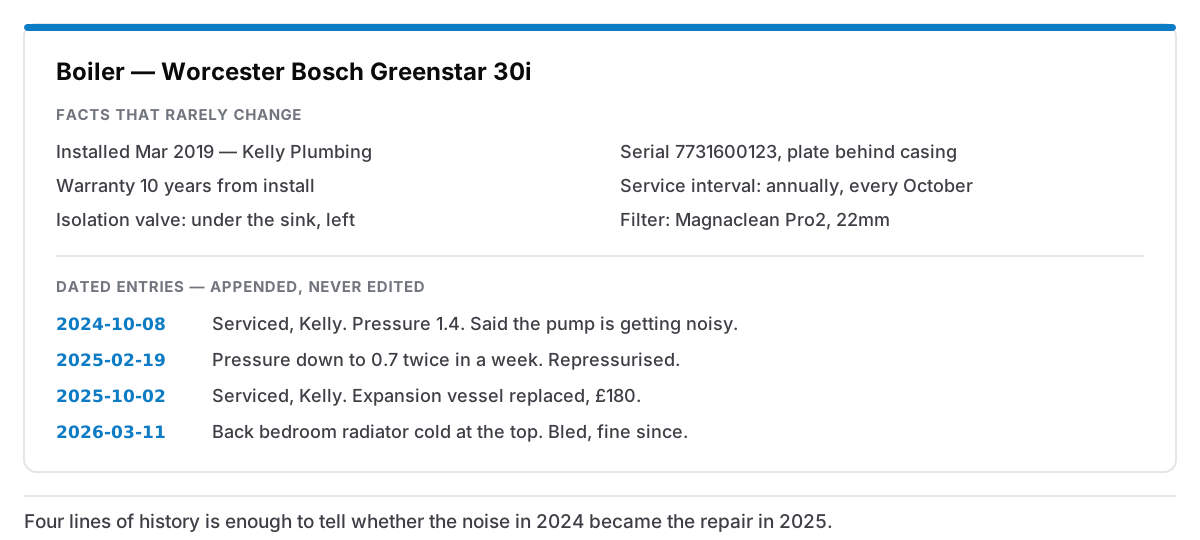
Each note has two parts, and keeping them separate is what makes it usable while somebody is standing in your kitchen asking questions.
The top block: facts that rarely change. Make and model. Serial number. Where it physically is. When it was installed, by whom. Warranty length and start date. Service interval. Which consumable it takes, with the exact size — filter, bulb fitting, belt, blade, cartridge.
Below it: dated entries, appended. One line or one paragraph every time anything happens. Serviced, on this date, by this person, who said this. Replaced this part. Made this noise. Fixed itself after doing that.
The rule that makes the log trustworthy is the same one that makes a lab notebook trustworthy: entries are added, never edited. If you were wrong in March, you write in September that you were wrong in March. Rewriting history turns the log into a summary, and a summary is exactly the thing you already had in your head and could not rely on.
The note that is only useful in an emergency
Separately from all of the above, one note, findable in three seconds, containing the physical facts about the building:
Where the water stopcock is, and which way it turns. Where the gas shut-off is. Where the consumer unit is, and what each breaker actually controls, having tested them rather than trusted the labels. Where the electricity and water meters are, and their serial numbers — the same photograph that makes an estimated bill checkable. Where the loft hatch pole lives. Which drain is which. Where the boiler pressure gauge is and what the number is supposed to be.
This note exists for the night something is leaking. It should therefore contain no cleverness, no nesting, and nothing you would have to read twice — and it should be one of the things that still works with the wifi off, because a burst pipe and a dead router are not mutually exclusive.
Test it once. Follow your own instructions to the stopcock and see whether they are true.
The boring appendix that saves the most time
A short note, or a section of the house note, listing consumables and finishes. It is the least interesting thing in this article and probably the one you will use most.
Paint: room, brand, colour name, code, finish, and which wall got the second coat. Filters: appliance, exact size or part number. Bulbs: fitting type, wattage, colour temperature, because a kitchen with two slightly different whites is a special kind of irritating. Batteries for the thermostat and the smoke alarms. The tile, the grout, the flooring, the specific screws.
Every one of these is a fact you already established once, standing in a shop or a merchant's, and will otherwise establish again from scratch. The photograph of the tin, pasted into the note, does the job faster than typing the code.
Write it up the day it happens
The whole system fails at one point: the gap between the tradesperson leaving and you writing anything down.
They tell you three useful things on the doorstep. By the evening you have one of them, by the weekend none. So the entry gets written while they are packing up, or in the ten minutes afterwards, on a phone or a laptop, badly. Six words is fine. "Serviced, fine, said the pump is getting noisy" is a complete and useful entry.
This is the same discipline as writing it down the first time you work it out, and it fails the same way: the moment you know the thing is the moment it feels least worth recording, because right then it is obvious.
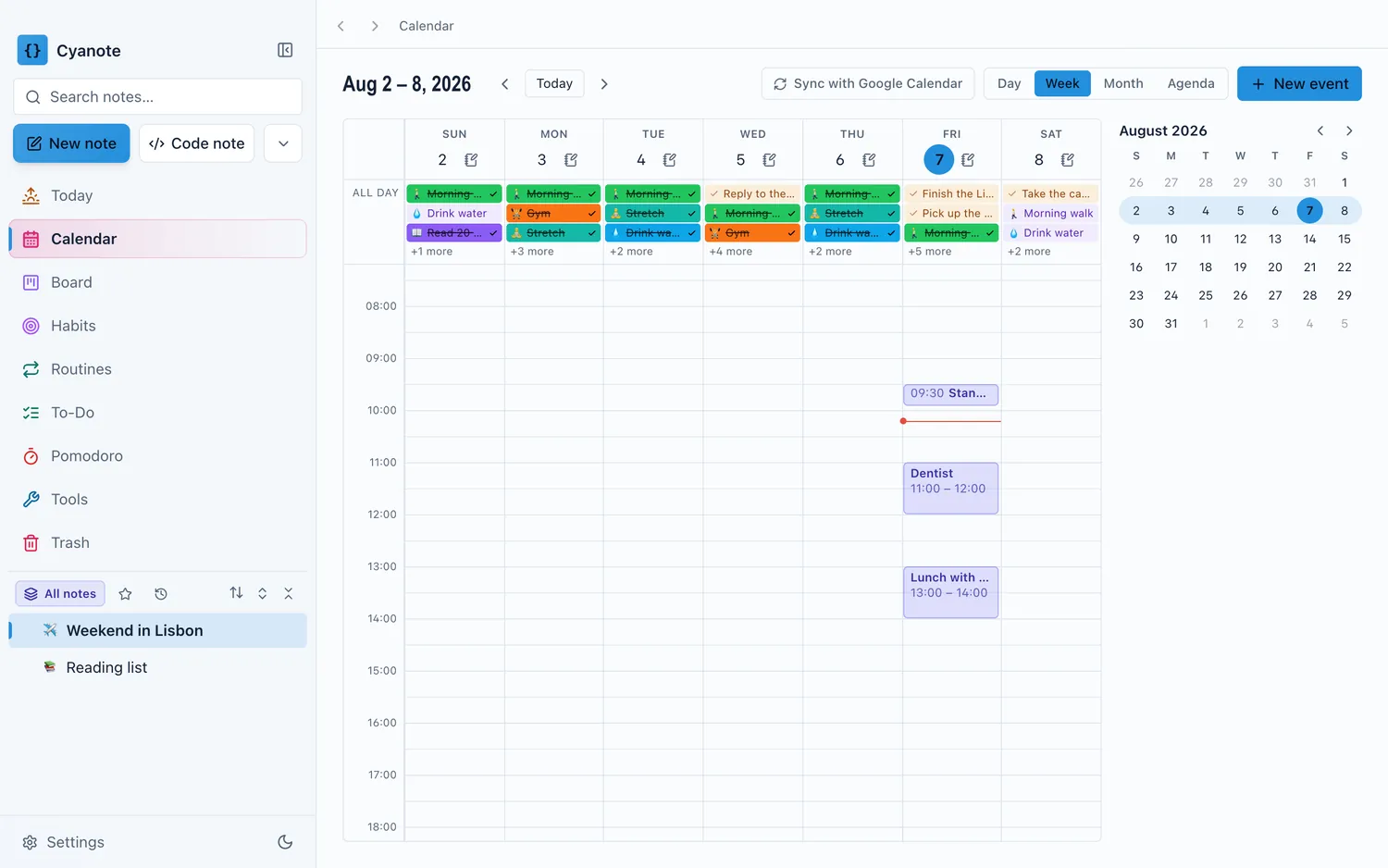
The dates with money attached — annual service, warranty expiry, insurance renewal, the certificate that needs renewing — go in the calendar, not the note. A note cannot remind you of anything. Give them a month's notice rather than a week's, for the same reason as everything else in life admin: a week tells you it is happening, a month lets you get quotes.
The car is the same problem with a book nobody fills in
Cars come with the service book precisely because the industry learned that undocumented maintenance destroys resale value. Then the book lives in the glovebox and the dealer stamps it and nothing else ever gets written in it.
The things that are not in the stamped book are the ones you want: the tyre size and the pressures, the battery fitted and when, the oil it takes, the MOT or inspection date, the tracking done after the pothole, the intermittent fault the garage could not reproduce, what the last three services actually cost so you can tell whether this quote is reasonable.
Same shape as the boiler. Top block of facts, dated entries below, dates in the calendar.
Handing it over
The eventual payoff is a handover, and there are more of them than you think: selling, letting, a housesitter, a new partner moving in, a family member dealing with the place when you cannot.
A house with a written history hands over in twenty minutes. Without one, it hands over as a tour of the building with you narrating from memory, which is the format that guarantees the stopcock gets mentioned and the immersion switch does not.
This is handing over your work applied to a building, and it has the same test: can somebody else run this thing from what is written down, without asking you? If the answer is no, the gap is the list of things to write.
The honest version
This will not take a weekend. It takes about an hour to start and then thirty seconds a few times a year, and it never feels urgent, which is why almost nobody does it.
The honest pitch is not that it is satisfying. It is that you already paid for every one of these facts once — in a call-out fee, an afternoon of research, or a conversation on a doorstep — and writing them down is how you stop buying them again.
Start with three notes: the boiler, the emergency facts, and the paint. That is an hour, and it covers the three things you are most likely to need at short notice.
If you want somewhere for them that opens instantly, holds photographs of the serial plates alongside the text, and works when the broadband does not, Cyanote is $7.99, once — notes, a calendar for the service dates, and no account to be locked out of at the moment the boiler dies.