A big event is an unusual project. The date cannot move, most of the work happens in the last fortnight, you are coordinating a dozen suppliers you have never worked with, and you are doing it around a life that continues.
Wedding planning software exists and mostly consists of a checklist somebody else wrote, a budget spreadsheet, and a guest list. Two of those three you can do better yourself, and the third is not where things go wrong.
The three failures
A deadline nobody was tracking. Final numbers to the caterer. The deposit that secures the date. The point after which the deposit is non-refundable. Every supplier has one and they are stated once, early, in an email or on a call.
A detail agreed and not recorded. What the price includes. Whether they set up. What time they arrive. Whether the corkage was waived. These are agreed verbally, in a friendly conversation, and remembered differently by both parties four months later.
Everything landing in the last two weeks. Because most of the work genuinely can only be done then — final numbers, seating, timings, confirmations — and if the earlier work slipped, it lands there too, on top of a fortnight that was already full.
None of these is a budget problem. Budgets go over, and everyone survives that.
One note per supplier
Venue, caterer, photographer, music, flowers, transport, cake, hire company. One note each.
At the top: contact name and direct number, the reference, what has been paid and what remains, what is included, and their deadline — the date they need something from you. That last one is the most important line in the note and it is the thing suppliers state once and assume you have absorbed.
Below: dated entries after every conversation. What was discussed, what was agreed, what they committed to.
Same shape as a client note, because an event is a project with a dozen suppliers and one immovable date.
Write up every call, in four lines
The one discipline that carries the whole thing.
"Spoke to Anna, 14 August: confirmed 6pm arrival, setup included, final numbers by the 2nd, corkage waived for our own wine."
That sentence is worth more than the rest of your planning, because it converts a friendly verbal understanding into a dated record. Almost every event dispute is an honest difference in recollection between two people who both remember the conversation and remember it differently. A dated note settles it in ten seconds and without any unpleasantness. You are not producing evidence, you are checking your own memory out loud.
Email confirmation of anything significant is the belt to that braces: "just to confirm what we agreed". Suppliers are used to it and it costs one line.
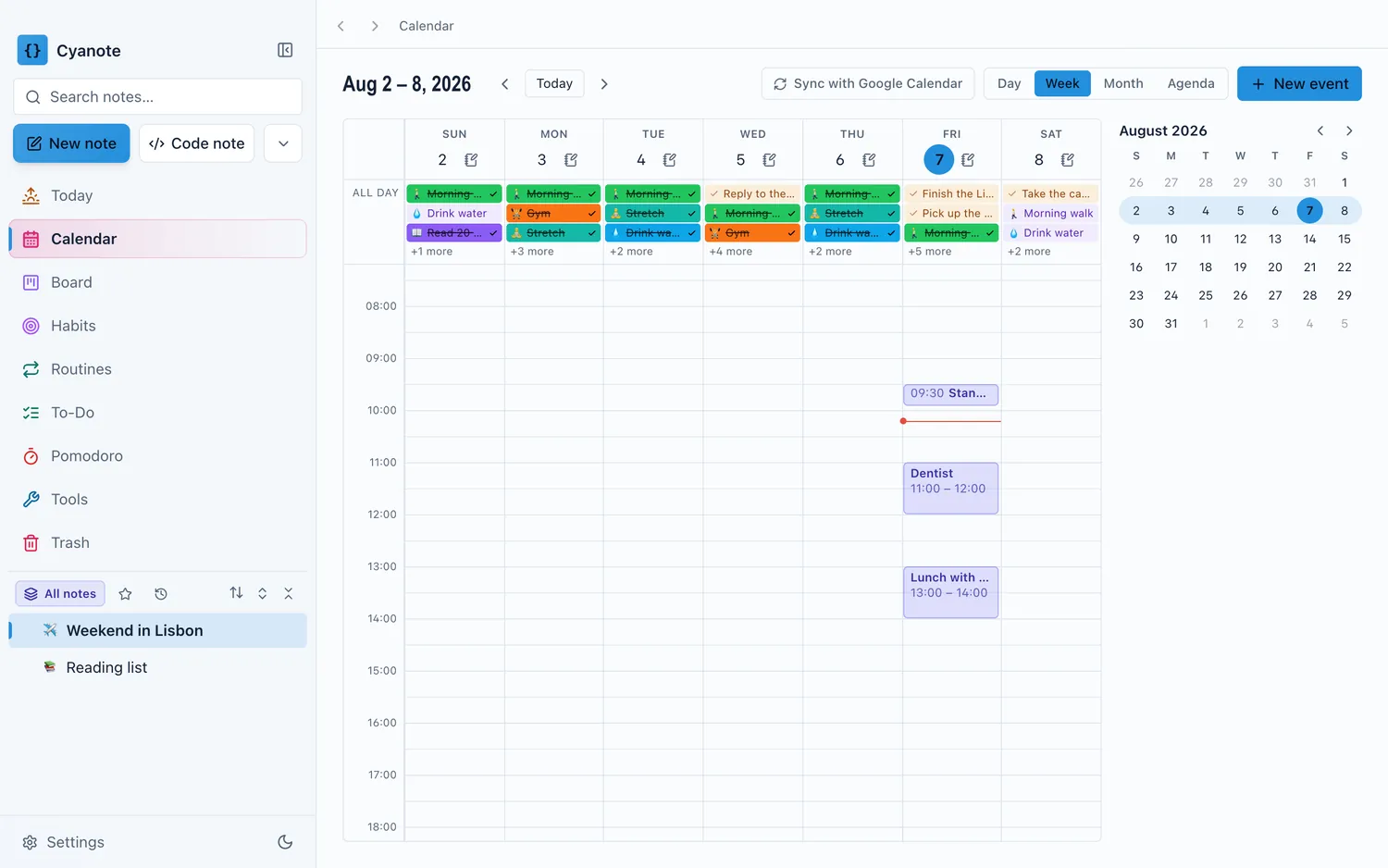
Every supplier deadline in the calendar
The moment you learn it, as an event, with a reminder two weeks ahead.
Final numbers. Deposit dates. Balance-due dates. The point where the cancellation terms change. Anything the supplier needs from you, with their name on it.
Two weeks rather than a few days, because the response to most of these is not instant: final numbers need chasing the last four people, and the balance needs money to be moved. Notice you cannot act on is not notice.
The board, three columns
Waiting on me, waiting on them, done.
The point is the middle column. Events stall because a supplier has not come back and nobody is counting the days. The photographer was going to send the contract, three weeks ago. A board makes that visible in ten seconds, and a polite chase at day seven costs nothing and moves everything.
Keep everything on it, including the small things. The small things are what land in the last fortnight.
The timeline document
The single most useful artefact for the event itself, and the one people write last or not at all.
A minute-by-minute schedule for the day: who arrives when, who sets up what, when things start, who is responsible for each transition. Written in advance, sent to every supplier and to the two or three people helping.
The reason it matters is what it does to you. On the day, you cannot be the coordinator. You will be occupied, or getting married, or hosting. The timeline is what lets someone else answer questions without finding you, and the difference between an event where the host is repeatedly pulled aside and one where they are not is entirely this document.
Include phone numbers for every supplier on it. Whoever is holding it will need them and will not have them.
The last fortnight
Since this is where it concentrates, plan for it deliberately.
Write the final-fortnight list in advance, when you are calm, around the two-month mark. What has to happen in those two weeks, in order. Following a list you wrote calmly is much better than generating one under pressure — a routine rather than a memory task.
Confirm everything, in writing, ten days out. Every supplier, a short message restating date, time, place and what they are bringing. This is where you find the one who has you down for the wrong Saturday, and finding it at ten days is entirely recoverable.
Decide who is answering questions on the day, and tell the suppliers that name.
Afterwards
Twenty minutes, within the week, while it is fresh.
Who was good and who was not, with specifics. Friends will ask, and you will have forgotten by the time they do.
What it actually cost, all in. Nobody writes this down and everyone wishes they had.
What you would do differently. Vivid for about a fortnight and gone by the second month.
The honest version
Event-planning software is not bad, and if a checklist somebody else wrote reduces your anxiety, use one. That is a real benefit and worth something on its own.
What it does not do is hold the specific facts about your specific suppliers, which is where things go wrong. That is notes, a calendar and one board.
Cyanote covers those three in one window: a note per supplier with references and their deadlines at the top, a calendar with reminders a day or a week ahead for every deposit and cut-off, tasks that take their date out of a typed sentence, and a board with three columns for the chasing. Full-text search finds "what did the caterer say about corkage" in four seconds, six months later. It is one local database on your own computer, which for a project involving your contracts, your payments and your guest list is where it should be.