A deposit dispute is not an argument about what happened. It is an argument about what can be shown to have happened, decided by somebody who was never in the building, reading two accounts of a carpet.
One of those accounts will be a dated check-in report with photographs, produced by a letting agent who does this four hundred times a year and has a template for it. The other will be yours.
That asymmetry is the entire problem, and it has nothing to do with whether you were a good tenant. You rent somewhere every two or three years. They do this professionally. They have a process and you have a recollection.
The window you do not know is open
Almost every tenancy starts with a check-in inventory — a document listing the condition of the property, room by room, written by the landlord or their agent.
It is not neutral. It is not meant to be dishonest either; it is simply written quickly, by someone who has seen forty flats this month, using phrases like "good condition throughout" that will later be read as a much stronger claim than whoever typed it intended.
You are usually given a short period to respond to it. That window is the single most valuable thing you get as a tenant and it is the thing most people let close, because it arrives in the week you are carrying boxes and it looks like paperwork rather than money.
Read it against the actual flat, in each room, with the document open. Where it is wrong, say so in writing, specifically, and keep a copy of what you sent and when. "The report says the oven is clean; it is not, photographs attached" is a sentence that will be worth several hundred pounds in two years, and it takes a minute to write on the day and cannot be written at all afterwards.
The exact rules — how long the window is, what scheme holds the money, who adjudicates, what happens if nobody responds — vary enormously by country and sometimes by region. Find out which rules apply to you at the start of the tenancy, not at the end. At the end you are looking it up because something has already gone wrong.
Day one is the only day the flat is not your fault
Everything visible on the first day is somebody else's. Everything visible on the last day is presumed to be yours unless the first day says otherwise.
So the first day gets an hour, and the hour produces photographs. Not an artistic record — evidence, which has different requirements:
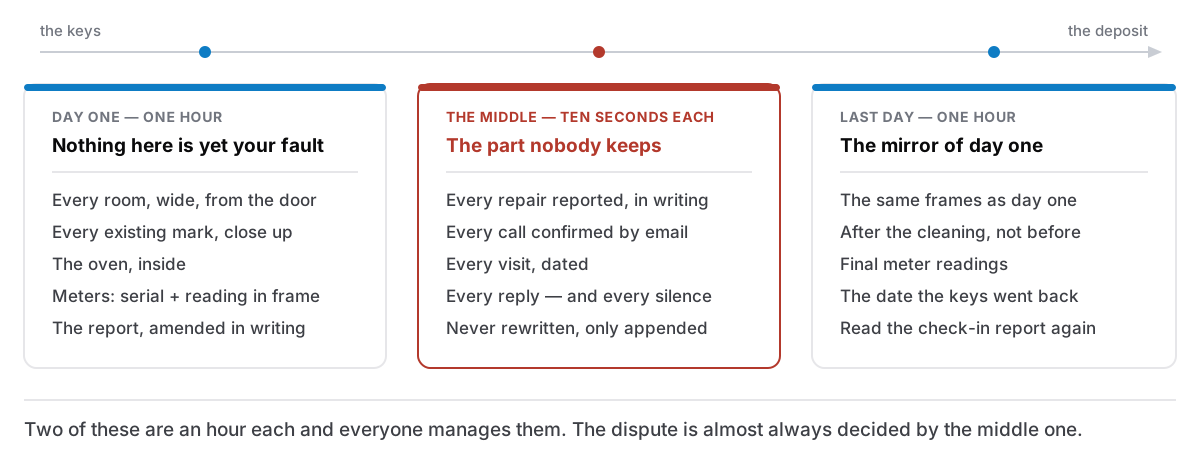
Every room, wide, from the doorway. Establishes the general state and the layout.
Every existing mark, close. The scuff on the skirting, the chip in the bath, the stain on the carpet by the window, the crack in the tile, the burn on the worktop. These are the specific things that come back later with your name on them.
The oven, inside. It is a cliché because it is true. Ovens are where a surprising share of deposit money goes, and the only defence is a photograph of how clean it was when you got the keys.
Appliances, working. A short video of each one running is better than a photograph of it existing.
Every meter, whole, with the serial number and the reading in one frame. This belongs to the deposit and to the bill you will be asked to pay — one photograph does both jobs.
Anything that does not work. The window that will not close, the radiator that stays cold, the extractor that does nothing. Report each one in writing this week, even if you do not want it fixed yet.
Then put them somewhere they will still be, in the state you left them, in two years — which means somewhere you back up, not only a phone that may be replaced twice before this tenancy ends.
The repair you reported by phone did not happen
This is the failure that costs the most and feels the least like a failure at the time.
You call about the damp. Someone is sympathetic. Nothing happens. You call again in March, and again in the summer, and eventually it either gets fixed or you stop mentioning it. When the tenancy ends and there is mould on the wall, the position is that you never reported it, because as far as any record is concerned, you did not.
A phone call leaves nothing behind. A text message to a letting agent's mobile leaves something, but on a device and in a thread you do not control and cannot search in two years.
The habit is simple and it is the same one that makes a house move survivable: report in writing, and log the ones you did not.
One note for the tenancy, with dated entries appended and never rewritten:
2025-11-04  Emailed agent re: damp on the north bedroom wall. Photos attached.
2025-11-19  Called, spoke to Dan. Said he'd chase the landlord this week.
2025-12-02  Emailed again, no reply to either.
2026-01-08  Contractor visited, said it is condensation, no work done.
Four lines. Written as they happened, each one taking ten seconds. Together they are a completely different document from "I definitely told them about the damp" — and the difference is visible to a stranger, which is the only audience that matters.
Follow up every phone call with an email that says what was agreed. Not as a hostile act — as the normal thing a person does. "Thanks for the call — just to confirm, you'll ask the landlord about the damp and come back to me next week." If it never happens, that email is the record. If it does, you have lost nothing.
The things that go missing from a tenancy
Collected from the ways these go wrong, and all of them belong in the same note as the repair log, at the top, where the facts sit:
The address as the agency writes it, and your tenancy reference. The landlord's name, and whether you deal with them or an agent. The deposit amount, which scheme holds it, and the scheme's reference — get this at the start; it is the number you will need at the end.
The tenancy start and end dates, the notice period, and how notice has to be given. Put the notice deadline in the calendar with a month's warning, because a tenancy that rolls on by accident is an expensive kind of accident, and this is exactly the life admin failure that dates prevent.
What is included: which appliances are the landlord's, whether the garden is yours to maintain, what the parking permit situation is, who holds the spare key. The emergency contact for a leak at 11pm, and whether it is the agent or the landlord, because you will need this once and urgently.
Where the stopcock is. The boiler's make and last service date. Yes, this is the same list as a house's service history — the building has the same needs whether or not you own it, and the difference is that you also need to prove you did not break it.
The last day, from the same positions
Check-out is the mirror of check-in and the part people rush, because by then they are exhausted and the van is outside.
Photograph everything again, after cleaning, from the same doorways and the same angles as day one. Same frames matter more than good frames: two photographs of the same corner two years apart are an argument that resolves itself. Two photographs of roughly the same room are a discussion.
Take the meter readings, photographed the same way, on the day you hand back the keys. Get written confirmation of the date you returned them.
Then, before you submit anything, read the check-in report one more time and go through it line by line against your own photographs. The disputes that go badly are the ones where the tenant responds to a deduction with a general feeling of unfairness. The ones that go well are the ones where the tenant responds with "item 14, hall carpet: photographed on 3 March 2024, attached, showing the same mark".
Fair wear and tear is where the money actually is
Nearly every deposit dispute turns on one distinction: damage, which you pay for, and fair wear and tear, which you do not.
Carpets thin. Paint marks. Things age, and a landlord is not entitled to a newer flat than the one they let. Where exactly the line falls depends on your jurisdiction and, honestly, on the adjudicator, but the thing that decides it in practice is almost always evidence of the starting condition and the length of the tenancy.
Which is the same conclusion as everything above. You cannot argue about the rate of decline of a carpet without a picture of the carpet.
Where this should live
An hour of photographs of the inside of your home, plus your tenancy reference, your landlord's details and a log of every disagreement you have had with them, is not a document to scatter across a phone gallery and an email account belonging to an agency.
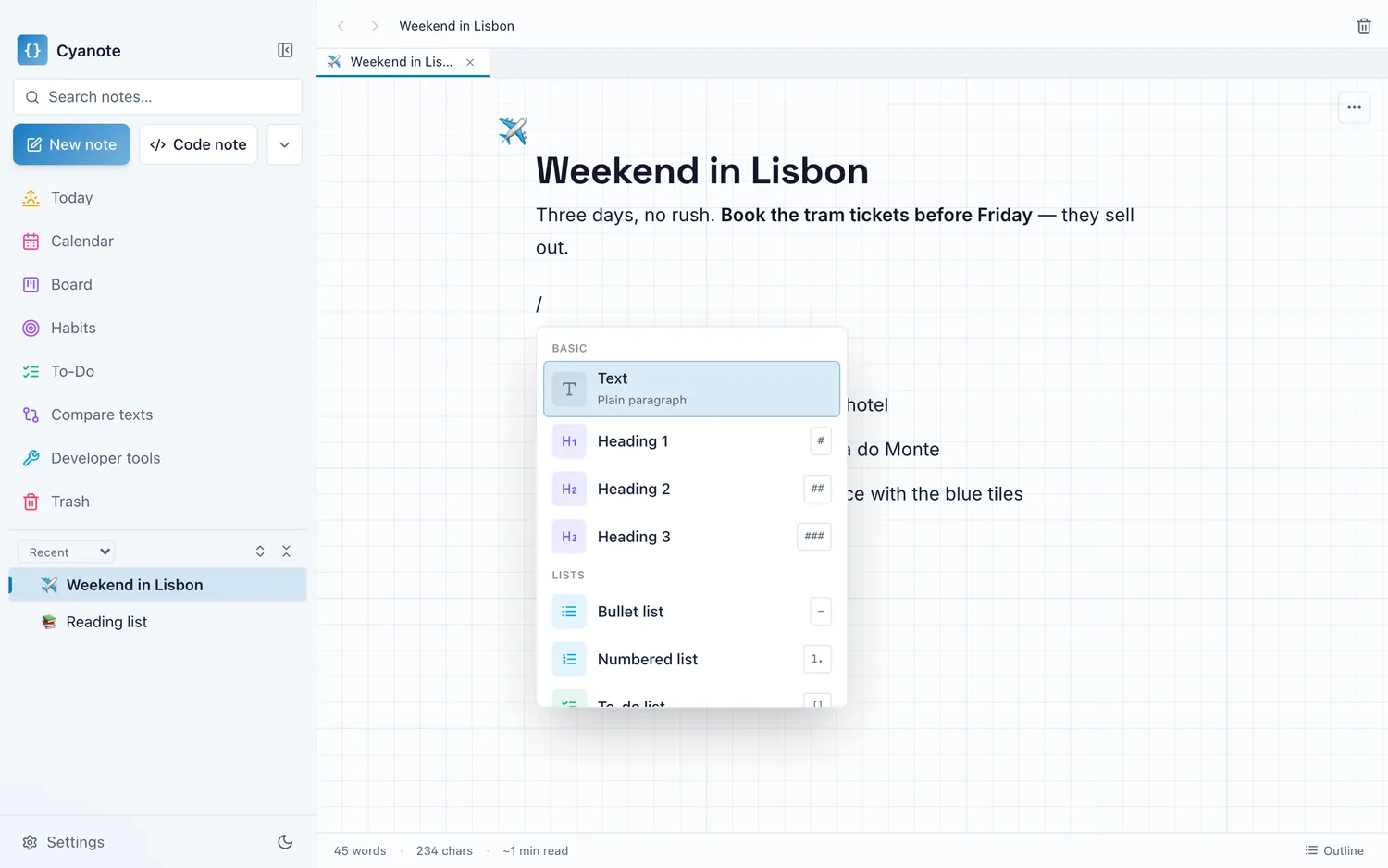
It wants to be one note, on your own machine, that opens when you need it and does not depend on an account you might lose access to between the start of the tenancy and the end of it. That is the ordinary local-first argument, on a document with a number attached to it.
The one thing you must add is a copy somewhere else. A deposit record that only exists on the laptop is a deposit record with a single point of failure, and tenancies run for years.
The honest version
None of this makes a landlord reasonable. A landlord determined to keep your deposit will still try, and you may still end up in an adjudication you find irritating and slow.
What it changes is the outcome of that adjudication, and more often, whether it happens at all. Most deductions are proposed rather than insisted on, and a tenant who replies with dated photographs and a written repair log usually receives a revised figure without any dispute at all — because the person on the other side can see exactly how it would go.
The whole system is two hours: one on the day you get the keys, one on the day you give them back, and ten seconds every time you report something. Against a deposit that is routinely more than a month's rent, that is the best-paid two hours in this entire blog.
If you want one place to keep the photographs, the references and the dated log together, Cyanote is $7.99, once — one note per tenancy, on your own Mac, with no account that can expire between the day you move in and the day you argue about the carpet.